
The strain on aging systems is shifting the booming city toward decentralized treatment
Houston is the largest city in Texas and one of the fastest-growing in the country. Its skyline soars and its suburbs stretch deep into once-rural areas as families and businesses continue moving to the region.
With a population of more than 2.4 million in 2025, an increase of about 100,000 since the 2020 population census, the demand for new homes is growing. While this growth is good for business, the city also must wrestle with the growing demand for water and wastewater treatment.
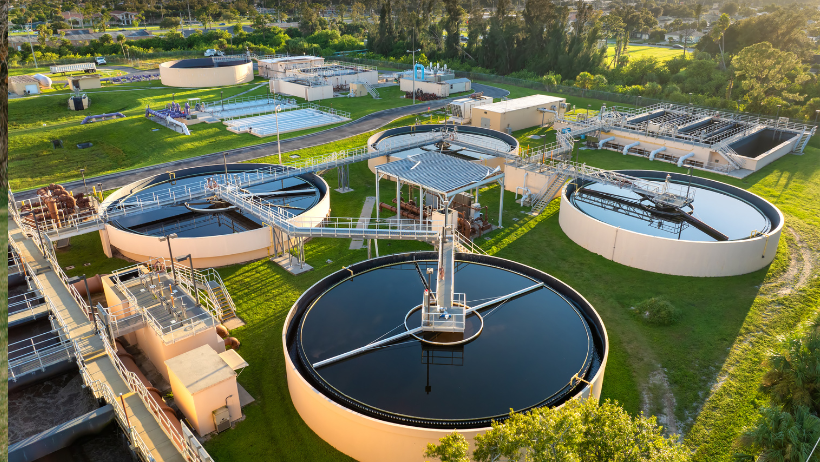
For decades, Houston’s centralized water infrastructure has provided water and wastewater treatment services to homes and businesses across the city. Yet as population growth accelerates and development spreads, that system is reaching its limits.
The challenge isn’t only keeping up with rising demand but also the soaring costs of expanding traditional infrastructure. Many communities are developing more quickly than utilities can extend their services, leaving a gap between the expansion and where the infrastructure can reach.
A Region Growing Faster Than Its Pipes
The Houston metropolitan area adds tens of thousands of residents each year. New master-planned communities, industrial parks, and logistics hubs are transforming the landscape north, west, and south of the city. But these developments are often located miles away from water and sewer pipelines.
Extending centralized infrastructure to these areas can take years, sometimes longer than the developments take to build. Developers must wait for costly extensions or invest heavily in temporary measures just to get their projects off the ground.
In many cases, this results in delays, higher costs, and increased strain on utilities that already are trying to manage aging assets, fluctuating groundwater levels, and stricter regulatory pressures.
The Shift Toward Localized, Scalable Treatment
Instead of relying only on centralized plants that serve vast areas, many communities are turning to decentralized wastewater treatment plants. These compact, modular systems can be deployed near the source of wastewater generation to serve a single subdivision, commercial site, or industrial cluster.
Unlike temporary solutions such as septic systems, modern decentralized systems are built for long-term performance and compliance. They treat wastewater to a high quality, ensuring that the effluent meets state discharge requirements, and can even produce high-quality treated water that can be reused for irrigation, cooling, or other nonpotable needs. That conserves local water supplies.
Importantly, the modular design allows them to be scaled easily. As a community grows, treatment capacity can be added in phases simply by adding more modules. That avoids the high upfront cost of oversized infrastructure that may not be needed for years. This flexibility makes decentralized treatment an ideal fit for the Houston region, where growth often occurs in phases and across varied terrain.
A Houston-Based Company Leading the Way
One example of a company based in the Houston area working on these solutions is AUC Group. Headquartered just outside Houston, this water treatment company has been pioneering decentralized water and wastewater treatment solutions for more than five decades. The organization understands Houston’s growth dynamics because it has helped shape many of the communities that define the region today.
AUC’s package treatment plants are pre-engineered and prefabricated for rapid deployment and easy installation. Each system is designed to meet regulatory standards set by agencies such as the Texas Commission on Environmental Quality (TCEQ), ensuring compliance and reliable performance from the start.
Where traditional centralized infrastructure might take years to fund, permit, and construct, AUC’s approach allows treatment capacity to come online in a fraction of that time. That means new housing developments, schools, and commercial centers can open sooner, without waiting for infrastructure extensions to catch up.
AUC’s decentralized systems bridge the gap between immediate development needs and long-term sustainability. They allow cities and developers to stay ahead of growth while still planning for future integration into larger utility networks if desired.
Relieving Pressure on Centralized Systems
Houston’s water system, like that of many large cities, faces a dual challenge: accommodating new growth while maintaining its infrastructure. The city’s core systems are aging, including the pipelines, pump and lift stations, and centralized treatment plants, and many are already operating near capacity. Extreme weather events like the floods and freezes that Texas has experienced in recent years add further stress.
Decentralized treatment can alleviate some of this strain. By treating water and wastewater closer to the source, these systems reduce the hydraulic load on main networks, minimize the risk of leaks or overflows, and limit the need for costly long-distance pumping.
In rural or fringe areas, these systems can serve as permanent infrastructure, turning wastewater into a valuable local resource and helping communities to conserve water and support sustainability goals.
A Smarter, More Resilient Future
As Houston continues to expand, the focus is not just on roads, housing, and jobs but on water. How the region manages its resources will determine how well it can sustain growth without compromising quality of life or environmental health.
Solutions like those provided by AUC Group show that Houston’s water future doesn’t have to depend solely on large-scale infrastructure projects. With flexible, decentralized systems in place, the region can continue to grow responsibly and sustainably. For residents across the suburbs, this means new neighborhoods can come online faster, with more reliable service and less strain on city systems.
Learn how local leaders are responding to Houston’s water demands. Reach out to Jennifer Yoingco, REALTOR®, and her team, The Houston Suburb Group. They’ll help you get ready to EXPERIENCE LIVING IN HOUSTON TEXAS!
Download our FREEBIES here!
The Ultimate Home Buyer’s Guide
The Ultimate Home Seller’s Guide
Find us on YouTube!
#jenniferyoingcorealtor #jenniferyoingco #JenniferYoingcoTexas #houstonsuburb #houstonsuburbs #houstonsuburbgroup #texasrelocationexperts #HoustonRelocationExpert #HoustonRelocationSpecialist #NurseRelocationExpert #NurseRelocationSpecialist #newhomeconstruction #thehighlands #ravennahomes #ravennahomesforsale #ravennahomesrealtor #ravennahomesrealestateagent #springtexas #tomballtexas #livinginhoustontexas #livinginhouston #thewoodlandstexas #conroetexas #montgomerytexas #cypresstexas #newcaneytexas #portertexas #katytexas #pearlandtexas #richmondtexas #fulsheartexas #sugarlandtexas #houstontexas #magnoliatexas #hockleytexas #pinehursttexas #jerseyvillagetexas #humbletexas
